Journal
How to Check Leather Quality: Grain, Origin, and Process
Not all “genuine leather” is equal. Two jackets can share a label and feel worlds apart after six months of wear. Quality shows up in the grain, the origin of the hide, the tanning method, and the finishing—long before marketing copy does.
At Guild & Grain, our leather is rooted in Pakistan’s tannery tradition: local hides, careful processing, and craft that respects the material. This guide is what we wish every buyer knew when judging leather with their eyes and hands.
Where the Leather Comes From Matters
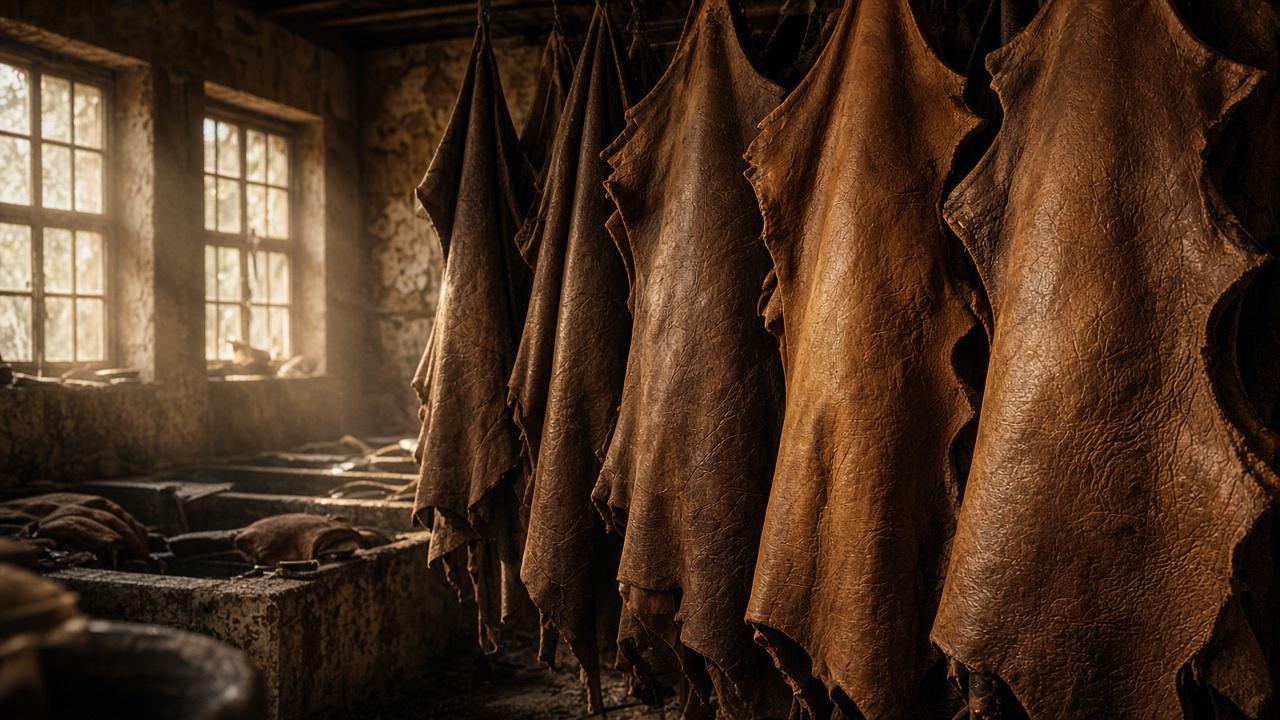
Leather begins as a byproduct of the meat industry. The best makers treat that origin with transparency: which animal, which region’s tanneries, and what standards guide the process.
- Regional craft: Pakistan is known for skilled tanning and cutting—generations of makers who understand how hides behave in jackets.
- Animal type: Cowhide tends to be tougher and more structured; sheepskin is softer, lighter, and more immediate in comfort.
- Traceable supply: Strong brands can speak to tannery partnerships instead of vague “imported leather” claims.
- Ethics in practice: Responsible sourcing means working with established tanneries, not chasing the cheapest anonymous stock.
Ask where the hide was tanned and finished. A clear answer is usually a good sign. Silence or buzzwords alone are not.
Reading the Grain
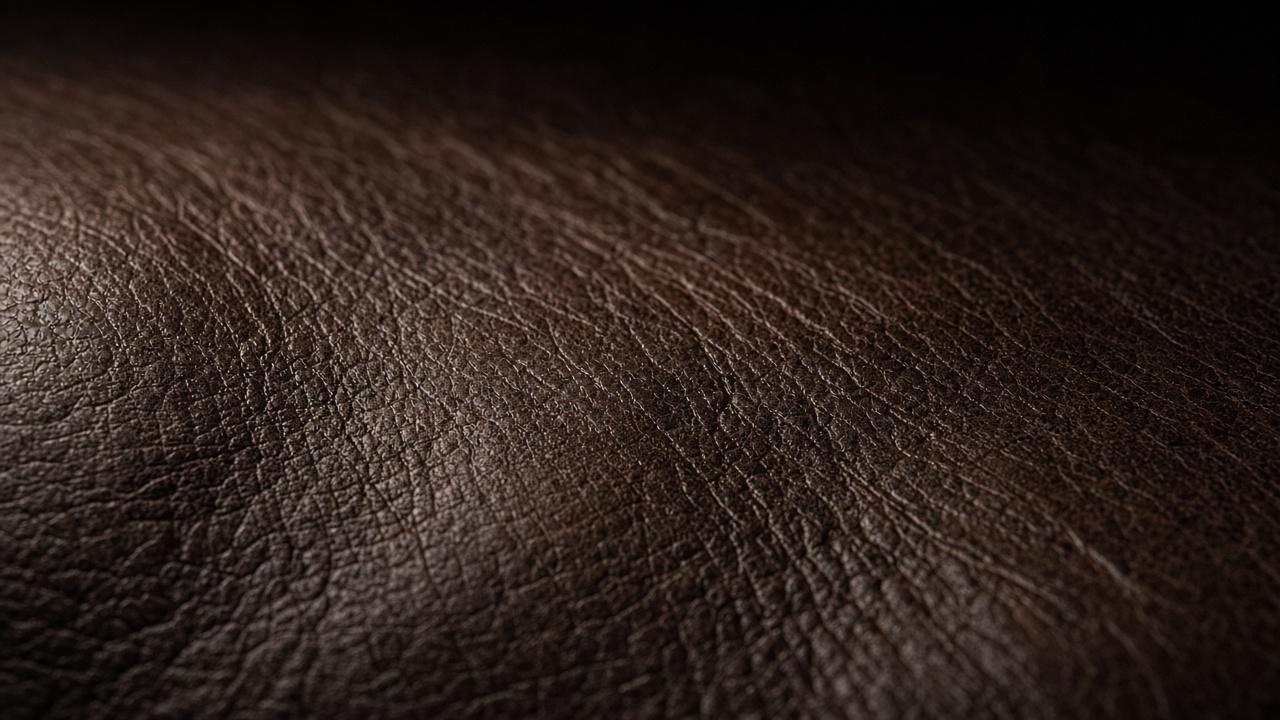
Grain is the surface fingerprint of leather. It tells you how much of the hide’s natural structure was kept—and how the leather will age.
- Full-grain: The top surface is intact. You may see pores, subtle scars, and variation. It breathes better and develops the richest patina.
- Top-grain: The surface is sanded or corrected for uniformity, then finished. Cleaner look, slightly less natural character than full-grain.
- Corrected / heavily coated: Flaws are buffed away and covered with a thick finish. Looks even at first, but can feel plasticky and crack sooner.
- Split / bonded (watch-outs): Lower layers or reconstituted fibers. Often used in cheaper pieces; less durable for a lifelong jacket.
Natural marks are not defects in good leather—they are proof you are looking at a real hide, not a printed imitation of one.
The Process: From Hide to Jacket Leather
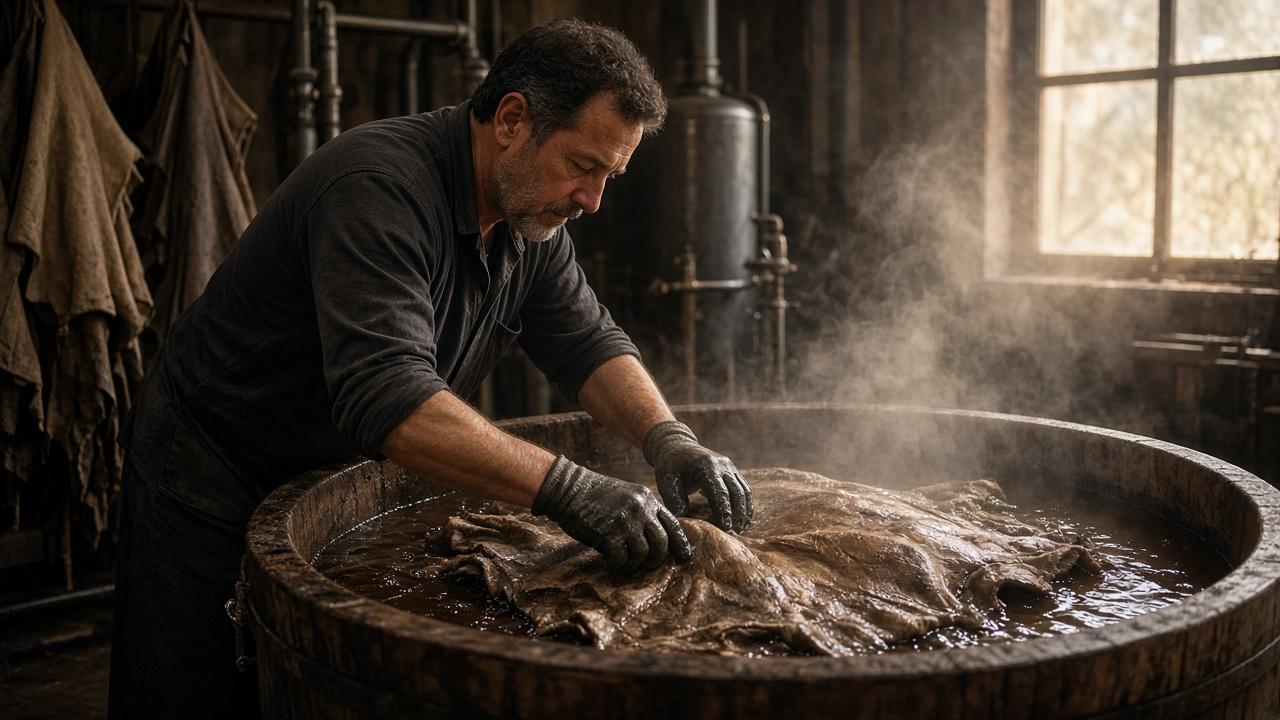
Tanning turns a perishable hide into stable leather. How it is done shapes softness, strength, color depth, and environmental impact.
- Prep: Hides are cleaned and prepared so the fiber structure can accept tannins evenly.
- Tanning: Vegetable tanning uses plant tannins for character and firmness; chrome tanning is faster and often yields softer, more uniform leather. Many modern jackets use carefully controlled chrome or combination methods.
- Retanning & dyeing: Builds hand-feel, color, and performance for apparel use.
- Fatliquoring: Oils and waxes are introduced so the leather flexes without drying brittle.
- Finishing: From light aniline (more natural) to pigmented coats (more uniform and protective). Lighter finishes show grain; heavier ones hide it.
Quality process shows in consistency: even color that still looks alive, edges that do not chalk instantly, and leather that flexes without whitening cracks.
Hand Tests You Can Do Yourself
You do not need a lab. A few simple checks separate honest leather from coated shortcuts.
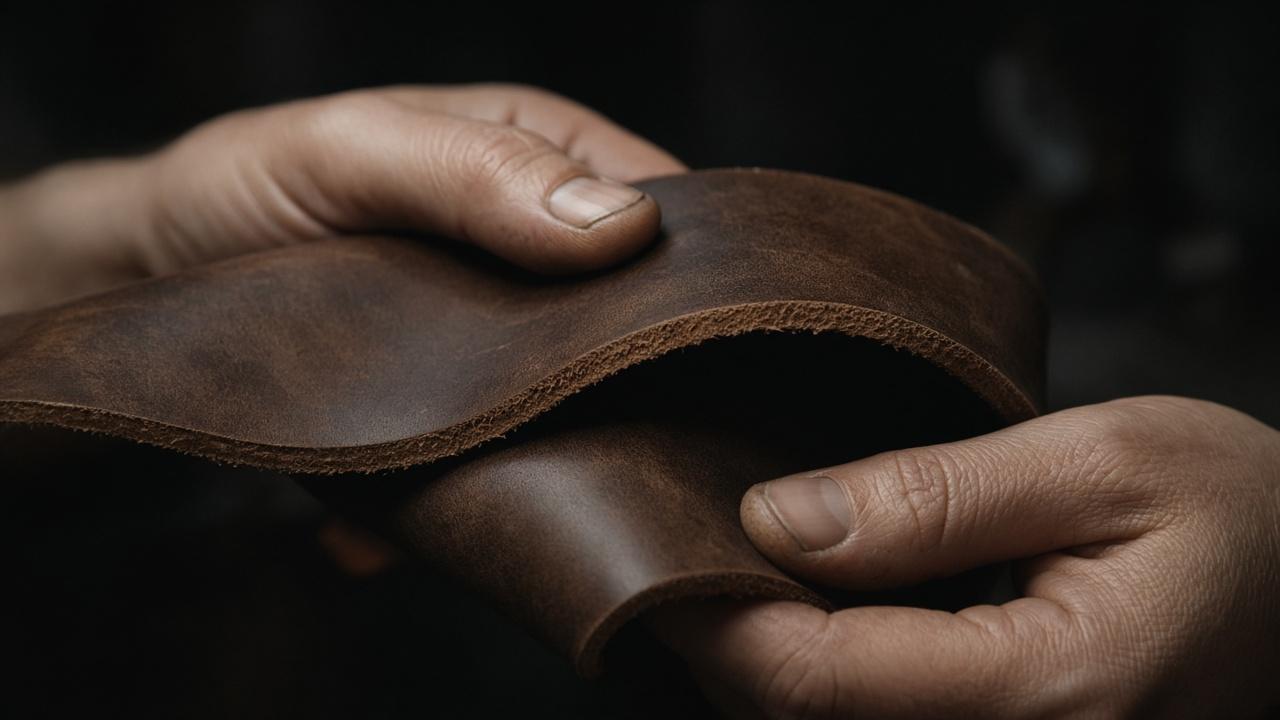
- The flex test: Bend a panel. Real quality leather wrinkles softly and recovers. Cheap coatings may show white stress lines.
- The smell test: Genuine leather has a warm, organic scent. Strong chemical or plastic smell suggests heavy synthetic finish or poor processing.
- The touch test: It should feel substantial—not sticky, rubbery, or oddly cold like vinyl.
- The edge test: Look at cut edges or underside when possible. Leather has fibrous depth; fake materials often look uniform like fabric or plastic.
- The thickness & drape test: Jacket leather should feel purposeful for its style—firm for structured bikers, supple for fashion-forward soft cuts—without feeling papery.
What “Good” Looks Like When It Is Finished
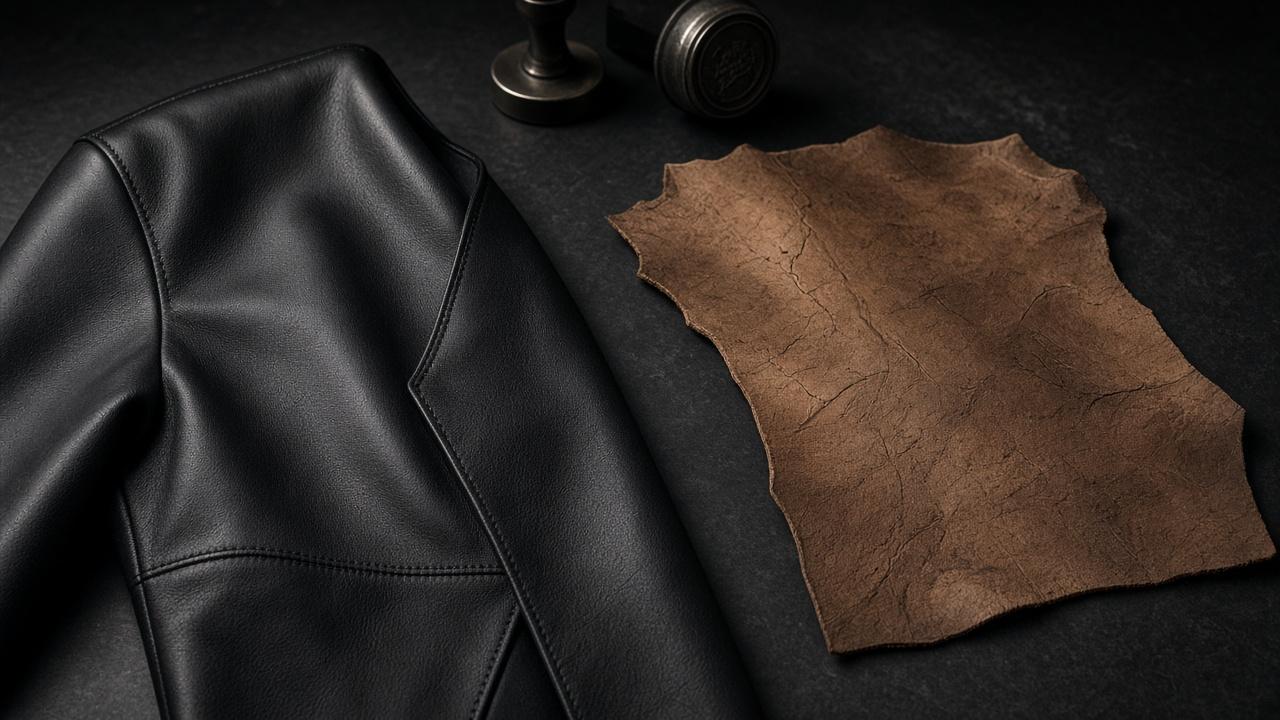
On a completed jacket, quality is the sum of hide and make. Check panels for matched grain direction, clean stitching, and hardware that feels equal to the leather’s weight.
- Color with depth: Dye that sits in the leather, not a flat paint sitting on top.
- Breathable comfort: Full-grain and thoughtfully finished leathers feel less clammy over time.
- Honest aging: Expect soft shine and tone shifts with wear—not peeling film.
- Maker clarity: Brands that explain grain, origin, and process are usually proud of both.
If you want help reading a piece from our catalog—or comparing cowhide versus sheepskin for how you live—email Guild & Grain. We would rather walk you through the leather than leave quality to guesswork.
Know the grain. Respect the process. Wear leather that earns its years.